The following interview with NABC Executive Director Jim Haney appears in the Winter 2017 issue of NABC Time-Out Magazine. To read the full Winter 2017 issue, click here.
It has been a number of years since the NCAA Final Four was in the Western part of the United States. What are your thoughts on Phoenix as the host city?
“The last time we held our convention in the western time zone was in 1995 when Seattle hosted the Final Four and the NABC Convention. This will be the first time Phoenix has hosted a Final Four so we all, coaches included, will enjoy a new experience. I believe the folks in Phoenix will do a wonderful job of hosting the Final Four and our convention. However, we should be cognizant that Phoenix is markedly different from Final Four host cities like Indianapolis, Houston, Dallas and Atlanta. Phoenix and the surrounding communities are true tourist destinations. As a result, there should be many local attractions our coaches may partake in. The weather should be excellent. Because the concentration of hotels is not downtown near the convention center where the NABC will be holding many of our meetings and clinics but spread out thoughtful the metro, transportation will be important for all coaches.”
“NABC staff members are working with the NCAA, which provides the transportation and develops the transportation plan for the Final Four, to identify the best means for coaches to move from their hotel to the convention center downtown. In addition, Phoenix will be in the Western time zone. The convention will be most impacted on Saturday. The semifinal games will be starting at 3:07 pm. As a result, the schedule of NABC activities must conclude by midday to allow our coaches time to travel to the University of Phoenix Stadium. My final thought is the experience in Phoenix will be like no other. That is not a bad thing. It just will be different.”
We are hearing heartfelt reports of gratitude from coaches who have reached out to the NABC Foundation Benevolent Fund for financial assistance. What are your thoughts on the Benevolent Fund?
“We are receiving touching letters and emails from coaches who have received funds from the NABC Foundation and its Benevolent Fund. As touching as those letters of thanks are they do not compare to the applications we receive where the coach bares the financial challenges facing him and his family due to job loss, overwhelming medical bills for his spouse, child or himself or other calamity that he is enduring. Honestly, it makes you so thankful that you have a job and your family is healthy!”
“In the midst of the joy of knowing we are helping coaches in need, we have concern that there are many coaches who are just now learning of the Benevolent Fund. We anticipate the number of applications we receive each year will rise, resulting in the need for more funds to cover those requests. The NABC Board in August established a $300,000 fundraising goal for 2016-17 and 100% participation from Division I coaches. The financial support for the Benevolent Fund is our coaches and their willingness to help their fellow coaches in need.”
“We have a long way to go to reach both goals, $300,000 funding and 100% participation, but we will be pounding the drum for support. We believe our coaches will rise to this challenge!”
There was a lot of talk about student-athlete time demands in 2016. Where does that issue stand?
“The January 2017 NCAA Convention will reveal a lot. The Autonomy Five Conferences will be voting on a slate of proposals including those addressing student-athlete time-demands. One proposal would establish consistent regulations governing student-athlete participation in media activities. This proposal resonated with me. This particular issue was often discussed by the NABC Ad Hoc Group on Student-Athlete Time Demands as a problem for our players. The Ad Hoc Group included a recommendation that this matter be addressed and it’s great that it is included in the proposals. Another proposal would require no athletically related activities with the exception of competition to occur between 9 pm and 6 am. After a home contest that concludes after 9 pm, there would be no athletically related activity for an eight-hour period. Again this proposal had the support of the NABC’s Ad Hoc Group. Another proposal would require no athletically related activity for a seven-day period beginning the day after a team’s last contest. In addition, the institution would provide a student-athlete 14 additional days off during or outside the playing and practice season during the academic year. The Ad Hoc Group supported the seven-day, no athletically related activity.”
“The Ad Hoc Group spent considerable time discussing a travel day counting as a day off. Student-athlete survey results reflected their desire to not count the travel day as a day off and there should be a day off that does not include travel. Some teams charter, others fly commercially, some bus and some travel by vans. During the season, teams could be playing three games in a seven or eight day period. Conference schedules vary as well. Because teams throughout NCAA Division I travel differently and other complications, the Ad Hoc Group did support a travel day counting as a day off. However, the Southeastern Conference proposed that travel after a competition that resulted in the team returning to campus between midnight and 5 am may be considered as a day off provided that the institution provides a continuous 24-hour period free of athletically related activity following the return travel.”
“The Ad Hoc Group also supported institutions developing a student-athlete time management plan for men’s basketball. The Autonomy Five Conferences will be voting on that proposal as well.”
“One final point to be made relates to any of these proposals supported by the Autonomy Five Conferences may be adopted by other conferences or individual institutions.”
The NCAA recently established a Competition Committee for Men’s Basketball. What is the purpose of the committee?
“The NFL and NBA both have competition committees where selected owners, general managers and coaches serve. The Men’s Basketball Competition Committee will include athletic administrators, conference office administrators, student-athletes and coaches. The Committee is to develop strategic principles in order to maintain men’s college basketball to be true to its original rules, playable, watchable, popular and relevant. Among the areas to be considered will include health and safety, sportsmanship, integrity, game operations, game presentation, technology and statistical trends.”
“The Competition Committee will make recommendations to the Men’s Basketball Oversight Committee for final approval.”
Time-Out Feature: Updates from NABC Executive Director Jim Haney
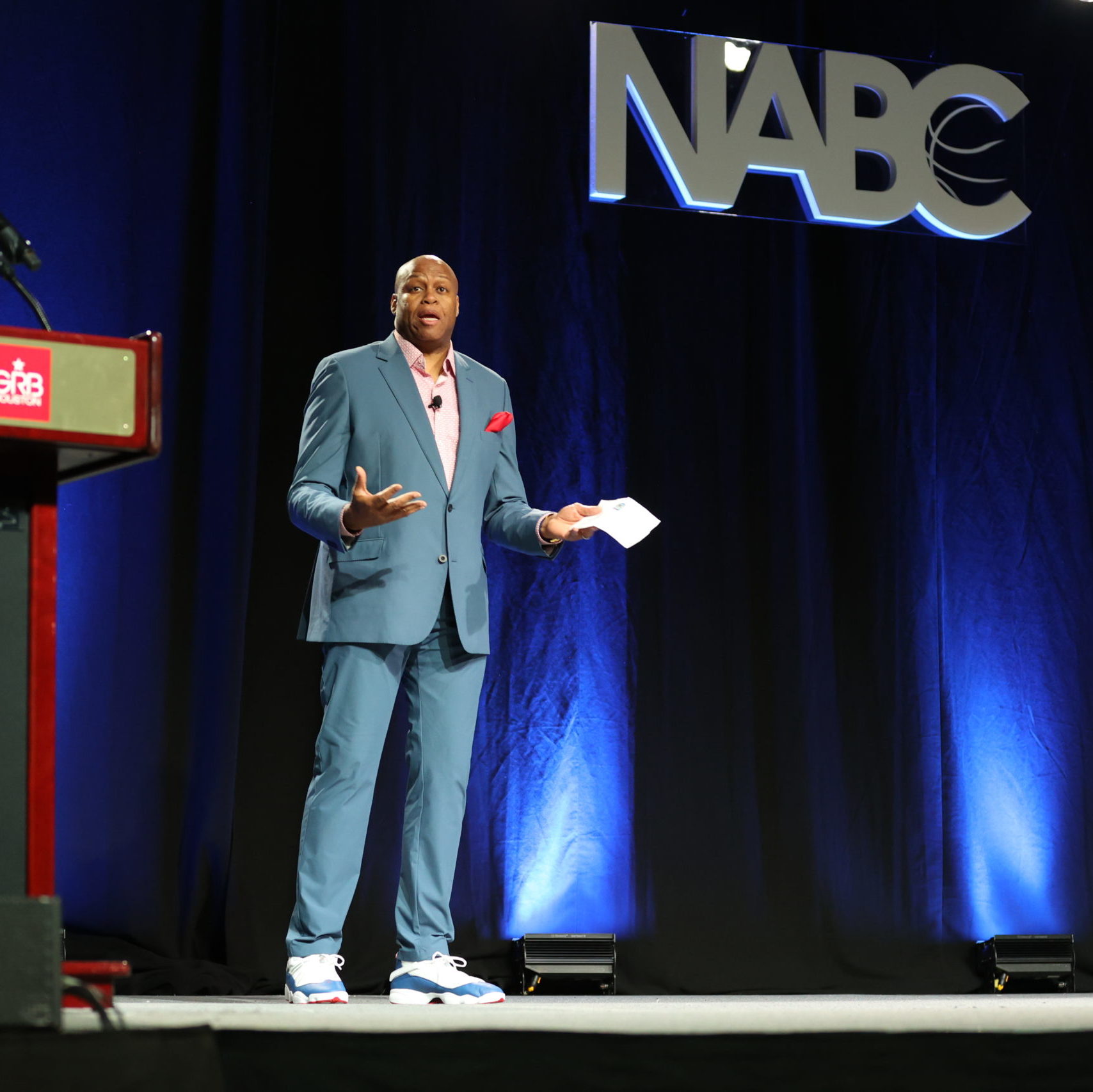
NABC Executive Director Jim Haney provides updates on a variety of topics in his Winter 2017 Time-Out Magazine column.